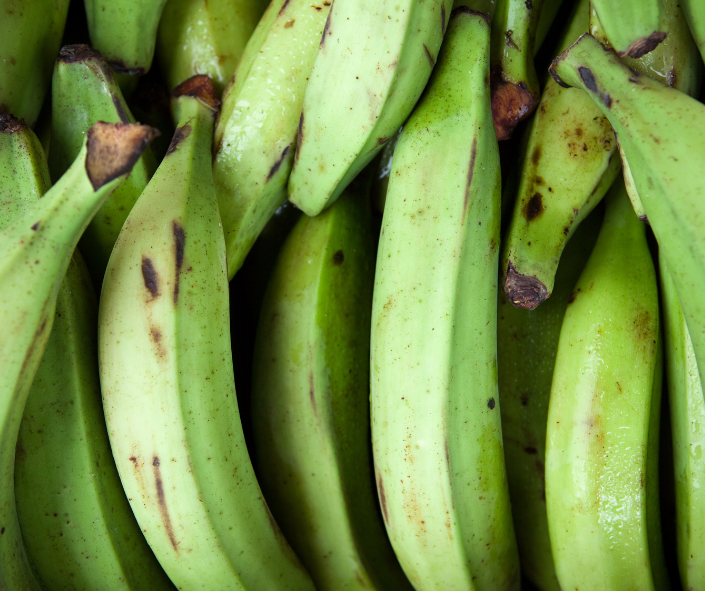
Green Plantain (Plátano Verde)
Unripe green plantains are savory and starchy, lacking the sweetness of their ripe counterparts. They are essential for making “tostones” (twice-fried smashed plantains) or thin, crispy chips known as “tajadas,” which are a common side dish for fritangas.
About this Ingredient
The green plantain is the unripe stage of the plantain fruit, a member of the banana family that is a staple food in tropical regions. Unlike the sweet yellow banana, the green plantain is starchy, hard, and savory, functioning much like a potato in cooking. It was introduced to the Americas by Spanish and African influences and quickly became a cornerstone of the Nicaraguan diet. In rural areas, boiled green plantains are a daily substitute for bread. The plantain tree is ubiquitous in Nicaraguan backyards, providing a year-round source of food that is both filling and nutritious.
Its culinary applications in Nicaragua are legendary. The most iconic preparation is 'Tostones,' where thick slices of green plantain are fried, smashed flat with a 'tostonera' (a wooden press), and then fried again until golden and crispy. These are the quintessential side dish for fried fish, cheese, or meat. Another popular form is 'Tajadas,' which are long, thin strips of green plantain fried into crispy chips, often served in a mountain atop a serving of fritanga. Whether boiled in a soup or fried into chips, the green plantain is the savory workhorse of the Nicaraguan kitchen.
Culinary Uses
- Tostones (Smashed twice-fried plantains)
- Tajadas (Thinly sliced chips)
- Boiled in soups
Cultural Significance
Green plantains are the bread of Nicaragua. No fritanga meal is complete without a side of crispy tajadas or tostones.