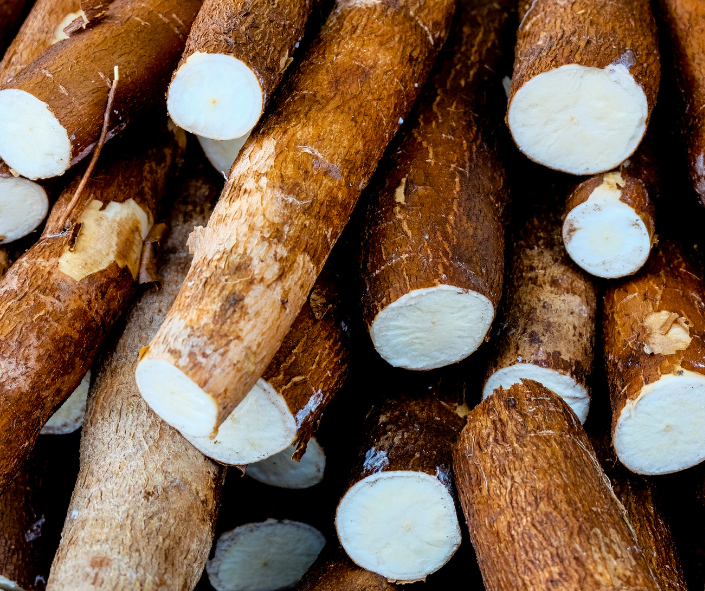
Yuca (Cassava)
Yuca is a starchy tuber that serves as a staple carbohydrate in Nicaraguan cuisine, similar to a potato but with a denser texture and mild, nutty flavor. It is most famously boiled and served with chicharrones and cabbage salad in the classic dish Vigorón, or simply boiled and eaten with cheese.
About this Ingredient
Yuca, also known as cassava or manioc, is a woody shrub native to South America that has been a primary food source for indigenous populations in Nicaragua for thousands of years. It is incredibly drought-tolerant and can grow in poor soils, making it a reliable crop for subsistence farming. In Nicaraguan history, yuca was often the main source of carbohydrates before the widespread cultivation of rice. It is deeply embedded in the culinary traditions of the Pacific coast, particularly in the city of Granada, where the famous dish 'Vigorón' was invented in 1914 by 'La Loca' (The Crazy Woman), a street vendor who served boiled yuca, chicharrón, and salad on a banana leaf.
In modern Nicaraguan cuisine, yuca is revered for its versatility. It can be boiled until soft and served with a piece of salty cheese for a simple breakfast or dinner, or added to hearty beef and tripe soups to provide body and sustenance. One of its most popular forms is 'Yuca Frita,' where boiled yuca is cut into wedges and deep-fried until crispy on the outside and fluffy on the inside, often served with a garlic mojo sauce or simply with ketchup and mayonnaise. It is a comfort food that transcends social classes, enjoyed by everyone from rural farmers to city dwellers.
Culinary Uses
- Boiled for Vigorón
- Added to Sopa de Res (Beef Soup)
- Fried as Yuca Frita
- Boiled and served with cheese
Cultural Significance
A staple root vegetable that often replaces potatoes in the Nicaraguan diet. It is the base of Vigorón, a dish born in Granada that is a source of national pride.